More Than a Framework
Next.js, maintained by Vercel, has become the de facto standard for production React applications. But beyond the developer experience, there are concrete business reasons we chose it — and why we keep choosing it for every new client project.
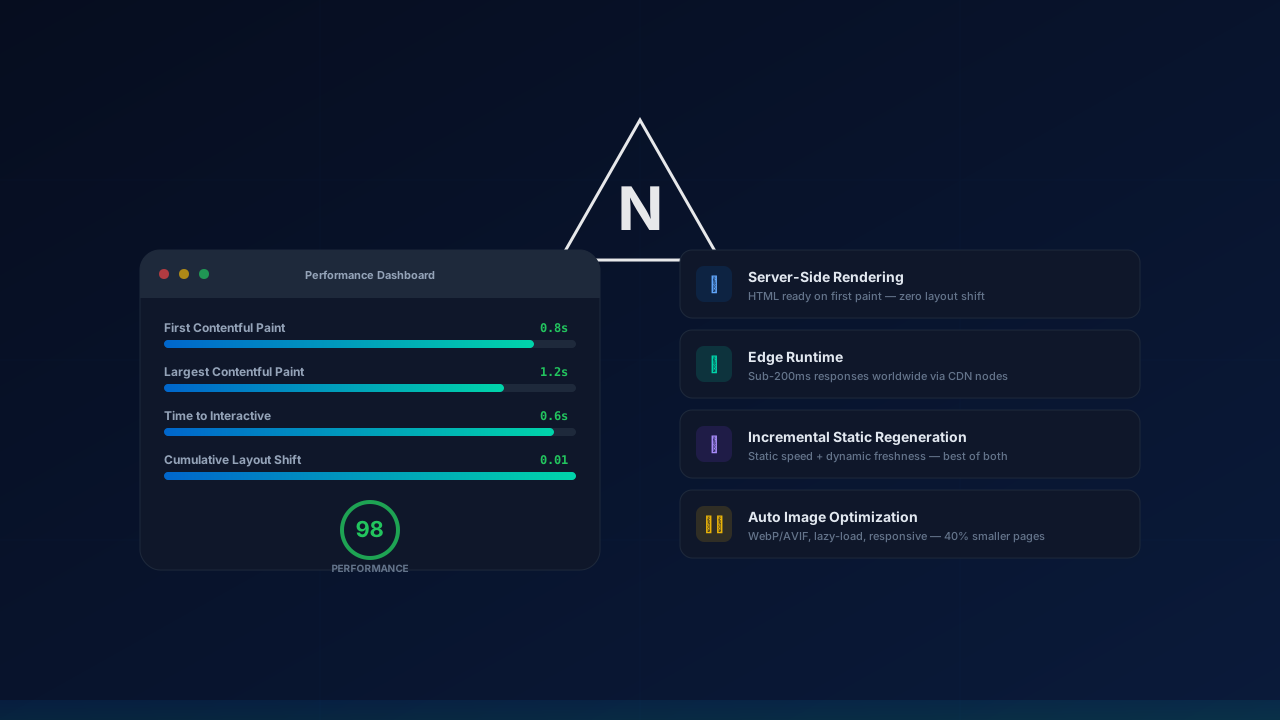
Server-Side Rendering = Faster First Paint
Traditional single-page apps ship an empty HTML shell and rely on JavaScript to fill it in. Users stare at a blank screen; search engines see nothing. Next.js renders full HTML on the server, so the page is visible immediately. Faster first paint → lower bounce rates → more conversions.
Edge Rendering = Global Speed
With Next.js middleware and edge functions, we can run logic at CDN nodes closest to each user. A visitor in Tokyo gets the same sub-200ms response as one in New York. No costly multi-region infrastructure needed.
Built-In Image Optimisation
Images are typically 50-70% of a page's weight. Next.js automatically converts images to modern formats (WebP, AVIF), lazy-loads below the fold, and serves responsive sizes. That's 30-50% bandwidth savings with zero manual effort.
Incremental Static Regeneration (ISR)
ISR gives you the speed of static pages with the freshness of dynamic content. Product pages, blog posts, and landing pages are pre-rendered at build time but automatically refresh in the background. Your CMS updates are live in seconds — not after a 10-minute rebuild.
Developer Velocity = Lower Cost
Type-safe API routes, file-based routing, built-in middleware, and first-class TypeScript support mean our engineers spend less time on plumbing and more time on features that drive your KPIs. Faster development → shorter timelines → lower invoices.
The Bottom Line
Next.js isn't a trendy choice — it's a strategic one. Better performance → higher SEO rankings → more organic traffic → more revenue. If you're curious about what it could do for your site, let's have a conversation.